
 11
11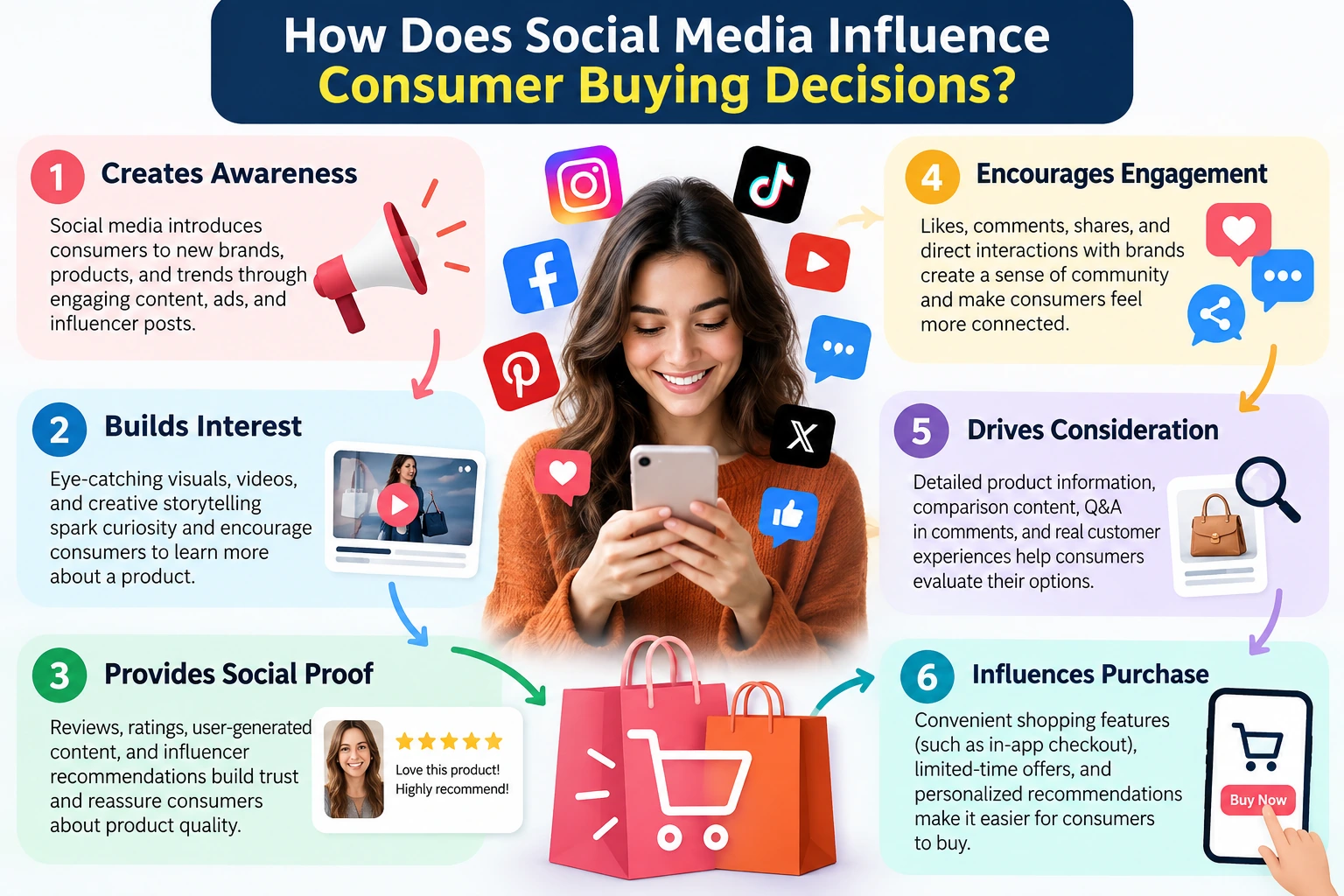
Social media has become an important part of how people discover products, research brands, and decide what to buy. Platforms such as Instagram, Facebook, TikTok, YouTube, and Pinterest allow businesses to showcase products, communicate with customers, and build trust through online interactions. Consumers can also compare experiences, read reviews, and watch product demonstrations before spending their money. Understanding how social media influences buying decisions helps businesses develop more effective marketing strategies and enables consumers to make informed purchasing choices.
One of the biggest ways social media influences consumer behavior is by introducing people to products they may not have discovered otherwise. Businesses share photographs, short videos, advertisements, and educational posts to highlight their offerings.
For example, someone browsing Instagram may discover a skincare product through a demonstration video or find a new restaurant through a local creator’s post. Repeated exposure can make a brand more recognizable and encourage consumers to explore it further.
However, product visibility does not automatically lead to a purchase. Consumers still consider factors such as price, quality, usefulness, and personal preferences.
Customer reviews play an important role in purchasing decisions. Before ordering a product, consumers often look for feedback from people who have already purchased or used it.
Positive reviews can increase confidence, while complaints about poor quality, delivery delays, or customer service may discourage potential buyers. Detailed reviews that describe real experiences are often more helpful than vague statements that simply praise or criticize a product.
Businesses should encourage honest feedback and respond professionally to customer concerns. Consumers, meanwhile, should look for recurring patterns across multiple reviews rather than relying on a single comment.
Influencer marketing allows brands to introduce products through creators who have built an audience around a particular interest, lifestyle, or area of expertise.
For instance, a fitness creator may demonstrate workout equipment, while a travel blogger may recommend luggage or travel accessories. Followers who value the creator’s opinions may become interested in the products being featured.
However, influencer recommendations are not always independent. Sponsored content and paid partnerships should be clearly disclosed, and consumers should consider whether a recommendation provides genuine information or primarily promotes a commercial relationship.
People sometimes use the experiences and behavior of others to guide their own decisions. On social media, likes, comments, shares, testimonials, and customer photographs can act as forms of social proof.
When a product receives considerable attention, potential buyers may become curious about its popularity. Seeing customers use a product in everyday situations can also help them understand how it might fit into their lives.
Nevertheless, engagement figures do not necessarily prove product quality. Likes and followers can be misleading, so buyers should consider independent reviews and reliable product information before making a decision.
Social media advertising allows businesses to display promotional messages to audiences based on permitted targeting criteria, such as interests, location, or previous interactions with a brand.
A local clothing store, for example, may promote a seasonal collection to people in its service area. A company selling home accessories might advertise products to users who have expressed an interest in interior design.
Relevant advertisements can help consumers discover useful products. However, repeated or intrusive advertising may frustrate users, making transparency and responsible data practices important parts of digital marketing.
Short-form videos and live demonstrations have changed how consumers evaluate products. Instead of relying only on written descriptions, buyers can watch products being used, compare features, and see demonstrations of their functionality.
A cooking appliance brand might show how quickly a device prepares a meal, while a beauty brand could demonstrate how a product is applied.
Visual content can make product benefits easier to understand, but edited videos may not represent typical results. Consumers should check specifications, limitations, and independent feedback before purchasing expensive or important items.
Promotional campaigns, discount codes, seasonal sales, and limited-time offers can encourage consumers to purchase products they have been considering.
Social media makes these offers easy to distribute and share. However, urgency-based marketing can also lead people to make rushed decisions.
Consumers should compare prices, review return policies, and determine whether they actually need a product before buying it. A discount is only valuable when the purchase offers genuine value.
Businesses can use social media to answer questions, resolve complaints, share useful information, and communicate updates. Prompt and respectful responses can help customers feel heard and valued.
Good interactions may encourage repeat purchases and recommendations. In contrast, ignoring complaints or responding aggressively can damage customer confidence.
Consistent communication and reliable service are essential because customers often judge a business by how it handles problems, not just by its promotional content.
To avoid being influenced by misleading promotions, consumers should compare products across multiple sources, check seller credibility, read return and warranty policies, and verify claims before purchasing.
It is also useful to distinguish between paid endorsements, personal opinions, and independently verified information. Taking time to evaluate a product can prevent unnecessary spending and disappointment.